
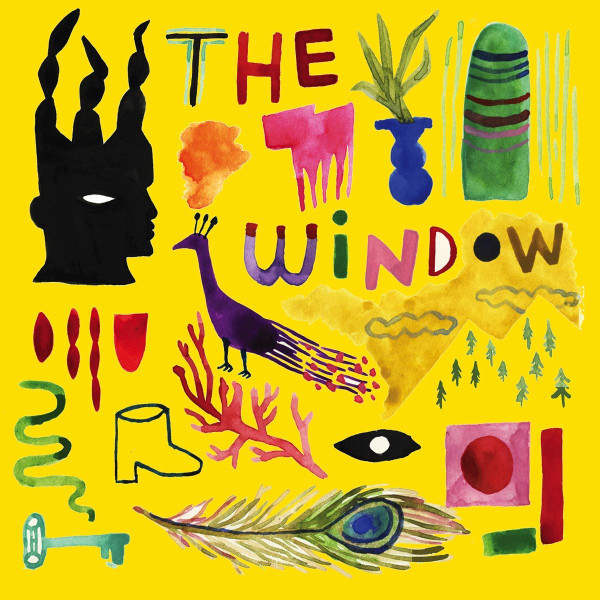
The Window (Mack Avenue)
Cécile McLorin Salvant
Released September 28, 2018
Grammy Award for Best Jazz VocalAlbum 2019
Jazzwise Top 10 Releases of 2018
JazzTimes Top 10 Albums of 2018
AllMusic Favorite Jazz Albums 2018
YouTube:
https://music.youtube.com/playlist?list=OLAK5uy_k8XPDRuF5MFJk0DfUvb09V0KP2dli7Muw
Spotify:
About:
The world first learned of the incredible vocal artistry of Cécile McLorin Salvant when she won the prestigious 2010 Thelonious Monk International Jazz Competition. In just under the span of a decade she has evolved into a multi-GRAMMY® Award-winner (with all three Mack Avenue Records releases receiving nominations, and the last two winning the Best Jazz Vocal Album category) and a prescient and fearless voice in music today.
Her newest release, The Window, an album of duets with the pianist Sullivan Fortner, explores and extends the tradition of the piano-vocal duo and its expressive possibilities. With just Fortner’s deft accompaniment to support McLorin Salvant, the two are free to improvise and rhapsodize, to play freely with time, harmony, melody, and phrasing.
Each new recording by McLorin Salvant reveals new aspects of her artistry. WomanChild and For One To Love established her style, her command, and interpretive range. Dreams and Daggers is a work that highlights her fresh and fearless approach to art that transcends the conventional—live and in the studio, with a trio and with a string quartet, standards and original compositions—held together by a vocal delivery that cuts against the grain, ever deepening, intensifying, and nuancing the lyrics.
Thematically, The Window is a meditative cycle of songs about the mercurial nature of love. The duo explores the theme across a wide repertory that includes Richard Rodgers and Stephen Sondheim, the inner-visionary Stevie Wonder, gems of French cabaret, and early Rhythm and Blues, alongside McLorin Salvant’s brilliant, original compositions. Just as a window frames a view—revealing as much as it hides, connecting as much as it separates—each song on the album offers a shifting and discerning perspective on love’s emotional complexity. McLorin Salvant sings of anticipation and joy, obsession and madness, torment and longing, tactics and coyness. The Window traverses love’s wide universe, from the pleasure of a lover’s touch with its feelings of human communion, to the invisible masks we wear to hide from others and from ourselves.
Her gifts as an artist are rooted in her intensive study of the history of American Music and her uncanny ability to curate its treasures for her audience. Her albums are explorations of the immense repository of experience and feeling that abound in popular song. She understands the special role of the musician to find and share the emotions and messages in music that speak to our past, present and future. “I am not interested in the idea of relevance,” she explains. “I am interested in the idea of presence. I want to communicate across time, through time, play with time.”
Onstage, her persona is often compared to that of an actress. But, as McLorin Salvant notes, “jazz would not be what it is without its theatrical origins, vaudeville, and minstrel shows.” Through her selection of repertory and brilliant interpretations, she “plays with time,” making the musical past speak to our contemporary world. Historically, her unflinching performance of songs from the minstrel tradition challenge us to think harder about race in America today. Her ironic, even sinister, rendition of songs explore the complex intertwining of sex, gender, and power. Her blues numbers are bawdy and vibrant, melancholic and forlorn, insistent and emancipatory.
She sings of the ecstasy and agony of love, of jubilation and dejection, of desire and being desired, of fearlessness and fragility. “I want to get as close to the center of the song as I can,” McLorin Salvant explains. “When I find something, beautiful and touching I try to get close to it and share that with the audience.” Immersed in the song and yet completely in control, McLorin Salvant brings her immense personality to the music—daring, witty, playful, honest, and mischievous.
All of McLorin Salvant’s study, training, creativity, intelligence, and artistry come together in her voice on The Window. The sound of her voice covers the gamut from breathy to bold, deep and husky to high and resonant, limpid to bluesy, with a clarity and richness that is nearly unparalleled. When she first burst onto the jazz scene, many listeners were struck by her ability to recall the sound of Bessie Smith, Sarah Vaughan, or Betty Carter. Yet with each new album, McLorin Salvant’s voice has become more her own, more singular. While conjuring the spirits of the ancestors, her references are controlled, focused, and purposeful. Her remarkable vocal technique never overshadows her rich interpretations of songs both familiar and obscure.
Touched at every moment by Cécile McLorin Salvant’s brilliance, The Window is a dazzling new release from an artist who is surely, to quote Duke Ellington, “beyond category”.
Track Listing:
1. Visions (Stevie Wonder) 5:11
2. One Step Ahead (Charles Singleton / Eddie Snyder) 2:09
3. By Myself (Howard Dietz / Arthur Schwartz) 2:34
4. The Sweetest Sounds (Richard Rodgers) 4:55
5. Ever Since the One I Love’s Been Gone (Buddy Johnson) 5:52
6. À Clef (Cécile McLorin Salvant) 2:05
7. Obsession (Dori Caymmi / Tracy Mann / Gilson Peranzzetta) 3:10
8. Wild Is Love (Ray Rasch / Dorothy Wayne) 3:21
9. J’ai l’Cafard (Louis Despax / Jean Eblinger) 3:00
10. Somewhere (Leonard Bernstein / Stephen Sondheim) 7:10
11. The Gentleman Is a Dope (Oscar Hammerstein II / Richard Rodgers) 4:29
12. Trouble Is a Man (Alec Wilder) 3:47
13. Were Thine That Special Face (Cole Porter) 3:19
14. I’ve Got Your Number (Cy Coleman / Carolyn Leigh) 5:00
15. Tell Me Why (Al Alberts / Marty Gold) 3:28
16. Everything I’ve Got Belongs to You (Lorenz Hart / Richard Rodgers) 1:10
17. The Peacocks (Jimmy Rowles / Norma Winstone) 9:34
Personnel:
Cécile McLorin Salvant: vocals
Sullivan Fortner: piano, organ (2, 9)
Melissa Aldana: tenor saxophone (17)
Recorded at Sear Sound, NY, and live at Village Vanguard, NY
Executive-Producer: Gretchen Valade
Creative Director: Maria Ehrenreich
Product Manager: Sharon Green
Recorded and Mixed by Todd Whitelock
Mastered by Mark Wilder
Art Direction: Cécile McLorin Salvant
Design: Raj Naik
Photography by Mark Fitton
Producers: Cécile McLorin Salvant and Al Pryor
Review:
On Cécile McLorin Salvant’s 2017 album, Dreams and Daggers, she paired with pianist Sullivan Fortner for a rousing and saucy live rendition of Bessie Smith’s “You’ve Got to Give Me Some.” It was one of the most delightful tracks on an album that earned the singer her second Grammy Award. Salvant and Fortner take that charming, in-the-moment chemistry even further on her fifth album, 2018’s The Window. Once again shifting between studio recordings and several live performances made at New York’s Village Vanguard, Salvant and Fortner commune over a deftly curated and deeply enveloping mix of standards, covers, and one Salvant original, “À Clef,” sung entirely in French. There are several impressive aspects to The Window that reveal themselves as you listen. First, while there are certainly songs people will recognize here, these are lesser-performed standards like Howard Dietz and Arthur Schwartz’s “By Myself” and the Nat King Cole number “Wild Is Love.” They aren’t unknown, but certainly not in the canon of songs you hear often. Even when Salvant and Fortner make a populist choice, as on their heartbreakingly delicate handling of “Somewhere” from West Side Story, the results are nuanced and harmonically expansive. Elsewhere, they explore even more unexpected fare, burrowing deeply into the Dori Caymmi co-write “Obsession” and bringing on board saxophonist Melissa Aldana for a haunting, impressionistic reading of vocalist Norma Winstone and pianist Jimmy Rowles’ “The Peacocks.” Secondly, for a singer who has drawn well-earned comparisons to the pantheon of great vocalists with names like Ella, Aretha, and Billie, Salvant has an almost magical ability to make each song her own. Her opening take on Stevie Wonder’s “Visions” sounds completely unlike the soulful 1973 original, yet somehow perfect as she imbues it with her own dusky, 1950s cabaret intimacy. Of course, Fortner is due equal credit for this transformative quality. A virtuoso in his own right, he has a pristine touch and lithe improvisational skills, drawing tastefully upon classical, post-bop, and stride styles, often within the same song. That he and Salvant play with such élan, but still manage to never get in each other’s way, speaks to their immense skill and creative empathy. Together, they play with an amorously creative and emotionally varied cornucopia of energies — so much so that you almost forget it’s just the two of them. Despite that virtuosic spark, The Window remains an intensely intimate listen, as if Salvant and Fortner are playing just for you.
Matt Collar (AllMusic)


