
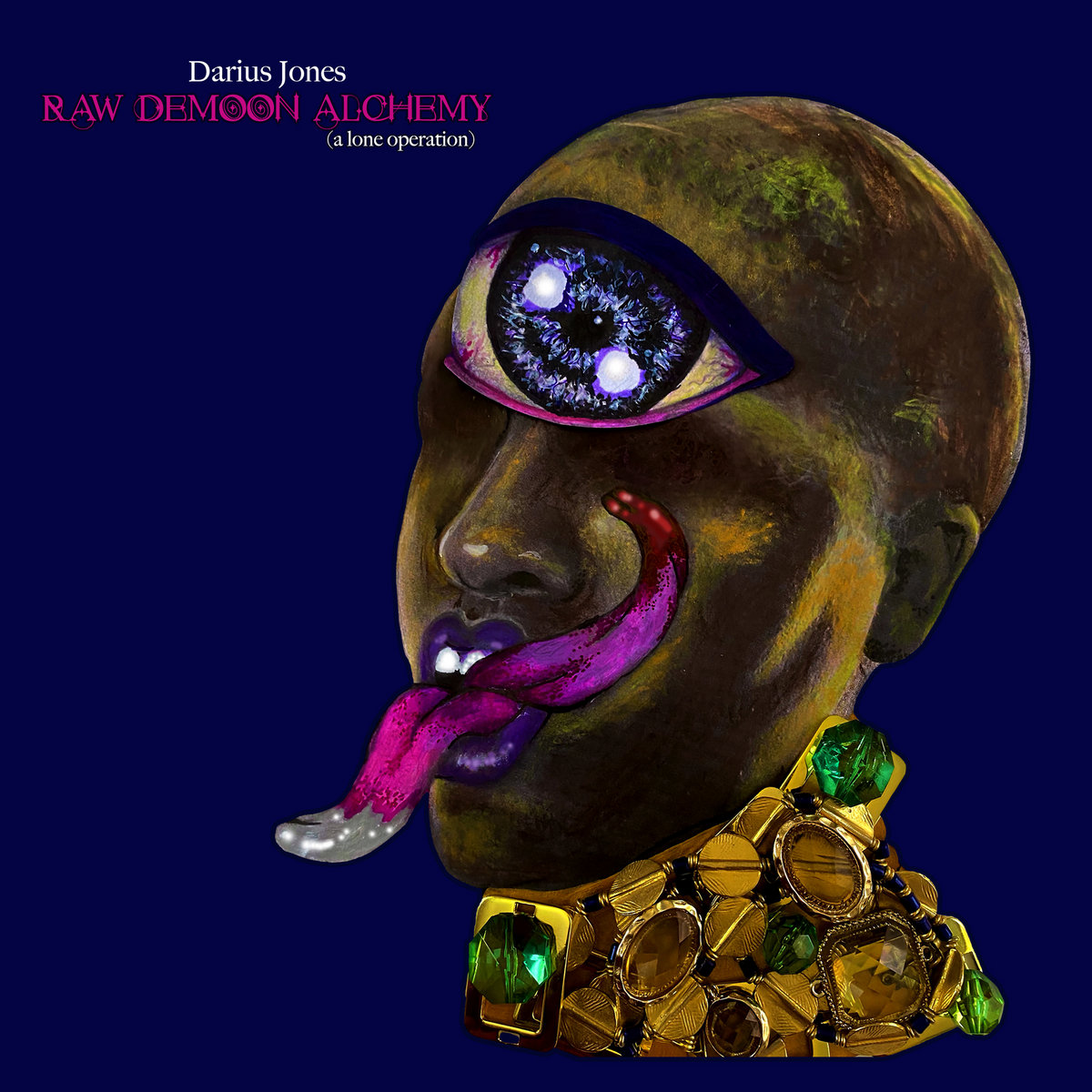
Raw Demoon Alchemy (A Lone Operation) (Northern Spy)
Darius Jones
Released November 2021
AllMusic Favorite Jazz Albums 2021
Arts Fuse 2021 Jazz Critics Poll Top 30 New Album
YouTube:
https://music.youtube.com/playlist?list=OLAK5uy_kOzrq0Z_NWo7bUMw27_7n454NC14Ps2Rk
Spotify:
https://open.spotify.com/intl-pt/album/5ayBKHAMYPH8vjntOqNqE3?si=BTQI1INySgCzvvOJHLXFJg
About:
Raw
Demoon Alchemy (A Lone Operation) harnesses the gamut of raw, unadulterated
emotions — suppressed feelings that we’ve all been allowed to “feel” again in
the wake of a global pandemic. Born out of a live performance in fall 2019,
during the last stop of his tour in Portland, OR, saxophonist Darius Jones
renders a solo effort that evokes sadness, rage, and confusion, all the while
still holding for glimmers of hope for the future.
With four of its five tracks on Alchemy, Jones selects compositions from
artists who are not just unapologetically Black but also notably ones that he
regards as “world builders.” From Sun Ra, Ornette Coleman, and Roscoe Mitchell
right up through the present with Georgia Anne Muldrow, Alchemy draws
immeasurable strength from each of these artists who dared to envision and
create an entire universe unto themselves, on their terms.
“I want to capture a moment in time, to crystallize the beginning of something
at the end of something else,” says Jones. Separated and now divorced from his
partner of 10 years, Alchemy balances the emotional heft of closure with the
simple act of standing alone. Each track unearths a deep and profound
vulnerability in every solo performance that isn’t just personal but also
delves into the macro-level divisiveness of our current political climate.
With “Figure No. 2,” Jones offers us a modern-day version of the blues.
Courtesy of Muldrow, her refrain encapsulates the vast breadth of the Black
experience in America, transforming our deep-seated pain into our beauty and
armor of resilience. Jones also proudly rests on the shoulders of Coleman and
Mitchell, two of this music’s known improvisers who often stood alone in this
music’s ever-changing landscape. He pays homage to Mitchell with “Nonaah,”
which in the late 1970s was initially met with jeers from an audience, that is,
until his 21+ minute long version overtook them.
Alchemy uncovers a duality of what it means to be alone, especially resonant in
today’s climate of social distancing. In one turn, we were all forced to put
life as we knew it on hold — to simply be still and deal with our emotional
realities unencumbered by the distractions of life. But at another turn, Jones
taps into an unknown power of his lone voice, finding a newfound strength and
enthusiasm that will carry him — and its listeners — beyond the uncertainty and
doubt of not knowing.
Track Listing:
1. Figure No. 2 (Georgia Anne Muldrow) 09:48
2. Sadness (Ornette Coleman) 09:22
3. Beautiful Love (Wayne King / Egbert VanAlstyne / Victor Young) 06:03
4. Nonaah (Roscoe Mitchell) 09:39
5. Love in Outer Space (Sun Ra) 13:45
Personnel:
Darius Jones: alto saxophone
Recorded October 18th, 2019, at Holocene, Portland, OR, by Darius Jones
Produced by Darius Jones
Mixed and Mastered by David Torn at Cell Labs East
Review:
The last time saxophonist/composer Darius Jones issued a recording under his own name was 2015’s Le Bébé de Brigitte (Lost in Translation), an album-length tribute to groundbreaking vanguard singer Brigitte Fontaine, recorded in collaboration with French vanguard composer/vocalist/pianist Emilie Lesbros. Since then, Jones has remained busy performing solo, with his trio, and in various groups as a sideman. Raw Demoon Alchemy (A Lone Operation) is a live solo saxophone outing, drawn from a deeply emotional 2019 live performance in Oregon. Its five tunes include four covers by “world-building” Black artists — Georgia Anne Muldrow, Ornette Coleman, Roscoe Mitchell, and Sun Ra. The other selection is a moving reading of a 1930s-era jazz standard that is closely associated with Doris Day and, later, pianist Bill Evans.
Jones was processing the end of a decade-long romantic relationship when he performed this concert. There is something unspeakably vulnerable in these performances. His unhurried approach discovers and rediscovers creative possibility to crystallize at the moment when an ending and a beginning interact simultaneously. His reading of Muldrow’s “Figure No. 2” offers the core lyric line as a mutant blues. Though his delivery is seemingly stoic, it gains emotional depth and dimension with every succeeding chorus. Ornette Coleman’s “Sadness” grinds on the high note in the first phrase; it fades amid pregnant spaces. Jones holds single elongated notes until he literally runs out of breath, and they decay naturally as he delves into the horn’s lower register, unhurriedly underscoring both melody and emotion. “Beautiful Love” opens with a quote from the Addams Family theme before Jones engages its lyricism. He finds the tune’s melancholy backbone by adding adorning fragments from “On a Clear Day,” “The Sheik of Araby,” and even the bridge of “The Star-Spangled Banner” before registering knottier, more exploratory runs. The reading of Mitchell’s “Nonaah” — one of the composer’s most enduring tunes — commences at mid-honk as economical blips and bleats emerge via breath control. About two and a half minutes in, Jones begins to explore the notes in the tune’s well-known vamp, and brings them closer and closer to one another until the vamp — raging, raw, and unruly — reflects the seemingly inexhaustible creativity inside the melody, and he juxtaposes a range of colorful possibilities. Sun Ra’s “Love in Outer Space” clocks in at nearly 14 minutes. Jones throws himself into its modes and tones. He adopts the blues and the liberating freedom with which Ra imbued it. Jones reaches across the horn’s registers, following both the literal and expressed intention of the lyric, and hovers about the tension before turning it inside out without losing sight of its spacious, haunted beauty. Raw Demoon Alchemy (A Lone Operation) is presented utterly unfiltered. Jones grabs on to what drew him to these tunes, seeks out the composers’ intentions, then imbues their creativity with meaning from his life experience as a collective past meets the prophetic spirit of the future.
Thom Jurek (AllMusic)


