
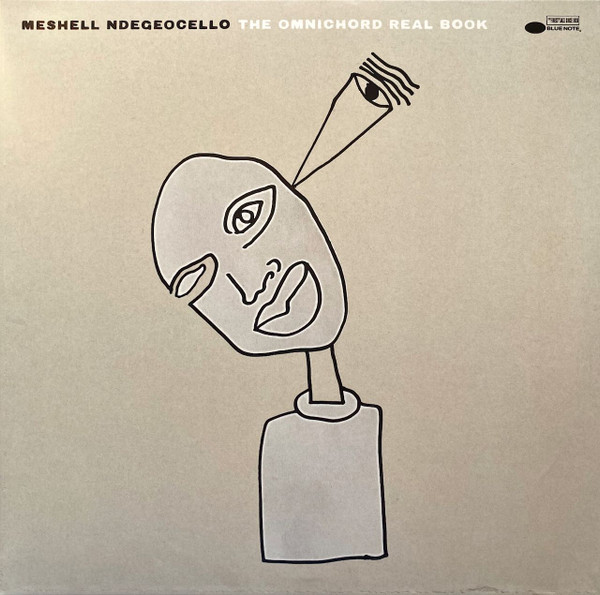
The Omnichord Real Book (Blue Note)
Meshell Ndegeocello
Released June 16, 2023
Grammy Winner for Best Alternative Jazz Album 2024
AllMusic Favorite Jazz Albums 2023
Jazzwise Top 40 Albums of the Year 2023
YouTube:
https://music.youtube.com/playlist?list=OLAK5uy_mF8qLClfxJ4KtNrcENML17G_tQbfZqqe0
Spotify:
About:
Acclaimed GRAMMY-winning multi-instrumentalist, singer, songwriter, and producer Meshell Ndegeocello makes her Blue Note Records debut with The Omnichord Real Book, a visionary and deeply jazz-influenced album that marks the start of a new chapter in her trailblazing and unpredictable career. Following her 2018 covers album Ventriloquism, Meshell returns with an album of new original material that taps into a broad spectrum of her musical roots.
Produced by saxophonist Josh Johnson, the album showcases some of Ndegeocello’s frequent collaborators including Johnson, keyboardist Jebin Bruni, guitarist Chris Bruce, and drummers Abe Rounds and Deantoni Parks. Also appearing on various songs are an amazing cast of musicians that includes guitarist Jeff Parker, vibraphonist Joel Ross, trumpeter Ambrose Akinmusire, harpist Brandee Younger, drummer Mark Guiliana, bassist Burniss Travis II, keyboardists Julius Rodriguez, Corey Henry, and Jason Moran, and vocalists Joan As Police Woman, Sanford Biggers, Hanna Benn, Thandiswa, and the HawtPlates (Justin Hicks, Kenita-Miller Hicks, and Jade Hicks).
Ndegeocello says that she tries to create music that musicians enjoy playing and that’s open enough so that they can truly explore the music’s rhythmic, harmonic, and melodic contours. “I really love the musical interaction – the playing off of each other,” she says. “It’s such a divine experience. Playing music is one of the few spaces where I feel genderless and raceless. And when the audience can dance, move, and experience transcendence while we are playing live, it feels like I have purpose.”
The album’s title derives, in part, from the Omnichord, an electronic instrument that produces an intriguing harp-like chiming timbre. Bruce gave an Omnichord to Ndegeocello as a gift during the pandemic while she was busy working on several television scores while in isolation. Composing so much on the computer, however, began taking its toll.
“I found that working on the computer started bringing my spirits down,” Ndegeocello explains. “The Omnichord gave me a way to work out melodies and ideas without having to look at a screen. I’ve been working on computers since my fourth record. I wanted to stop looking at the music and just play and hear the music.”
The sound of the Omnichord opens the album with “Georgia Ave,” a sonic homage to a main thoroughfare that runs north-south through Washington D.C. Many popular Black-owned businesses and restaurants dot the popular street as does the campus of Howard University. The song itself bounces with a stomping beat that alludes to go-go, the District’s indigenous music, as swarming organ riffs, percolating percussion, and West African-flavored guitar lines coalesce, perfectly articulating the African diasporic vibe that typifies Georgia Avenue. Ndegeocello also plays the Omnichord on the dreamy “An Invitation” and the Afrobeat-laced instrumental “Omnipuss.”
Those three songs show Ndegeocello adding new textures and colors to her expansive palette; they also illustrate her ingenuity with the instrument as she strums alluring melodies that accentuate the ruminative tenor of many of the album’s initial songs, which also include the enigmatic “Call The Tune” featuring Benn’s heavenly multi-tracked vocal harmonies, and the haunting “Good, Good,” on which Ndegeocello engages in some brilliant vocal antiphonic play with Jade Hicks amidst a shimmering bucolic soundscape.
The passing of Ndegeocello’s parents, Jacques and Helen Johnson, also underpins The Omnichord Real Book. When she started playing bass in various go-go and funk bands while attending D.C.’s Duke Ellington School of the Arts, her saxophone-playing father gave her a copy of The Real Book so that she could join him on some of his gigs.
While there is undoubtedly sadness in losing her parents, Ndegeocello does not shy away from some of the more challenging aspects of living under the weight of parental expectations of who they wanted her to be – both professionally and personally. In the aftermath of their passings, she confronted a simmering existential crisis.
“My parents are no longer there for me to direct my disenchantment at life at,” Ndegeocello says. “They are no longer there for me in some hopes of reconciliation; they are no longer there for me to worry about. So now, I have to be really present in my life.”
With that realization, Ndegeocello goes on to say, “with this record, I’m moving from the dogma of religion, my parents, the American dream, and politics. I’m also moving from the musical dogma set on myself, which was that I am supposed to be funky, soulful, political, and all the other things all of the time. If this is my last project, I feel like it is the most authentic thing I have to offer.”
Ndegeocello articulates that quixotic spirit spectacularly on the album’s lead single, “Virgo,” a transcendental, Afro-futuristic jam on which her introspective musings, touching on spiritual rebirth, soar through a celestial groove highlighted by Younger’s gentle harp accompaniment, thumping drumming, ticking rhythmic guitar riffs, dubby bass, and Rodriguez’s hypnotic Farfisa organ. Ndegeocello wrote the song when she was working with director Charlotte Brathwaite and they talked about the need to create new myths about their African ancestry.
In “Virgo,” Ndegeocello sings from the perspective of someone jumping off a transatlantic slave ship, and in their transition, their spirits travel across the ocean. “In this song, I’m wondering what I could have been,” she explains. “Where do I come from? What happened? To whom do I belong? I will long for those answers for the rest of my life. Those spirits who jumped off those slave ships are my ancestors in my mind. I had to create a new myth about my ancestors in much the same way that Sun Ra often talked about.”
The Omnichord Real Book contains other soul-searching songs such as the Sly Stone-inspired “Clear Water,” which features Parker delivering bluesy guitar counterpart lines; “ASR,” a sweeping Afrobeat-driven piece that also features Parker’s enchanting guitar accompaniment; “Perceptions,” a tender reverie featuring Moran’s plaintive piano; “Hole in the Bucket,” a gospel-drenched piece that features Justin Hicks singing lead; “Towers,” a shuffling ballad featuring Ross’ vibraphone; “Gatsby,” a gentle ballad written by Samora Pinderhughes that features additional vocals by Joan As Police Woman as well as Henry on piano; “Vuma,” a propulsive ode to the power of the human voice featuring South African vocalist Thandiswa and Ross on marimba; and “Burn Progression,” an avant-funk groove featuring Akinmusire.
Ndegeocello explains that “Burn Progression” and the sweeping soul-psychedelic evocation “The 5th Dimension,” featuring the HawtPlates, were inspired in part by Questlove’s award-winning documentary, Summer of Soul. “Watching that movie was life-changing for me,” she says. “it made me want to go back to that vocal group. But because that historic moment was kept from us for so long, it also sometimes makes me want to watch America burn.”
Ndegeocello’s burning reference evokes James Baldwin’s classic 1963 socio-political book, The Fire Next Time, on which he examined race relations in the U.S during the civil rights movement. It also hints at Ndegeocello’ s next Blue Note Records project…
Track Listing:
1. Georgia Ave (Meshell Ndegeocello) 02:40
2. An Invitation (Meshell Ndegeocello) 02:21
3. Call the Tune (Hanna Benn / Marton Bisits / Meshell Ndegeocello) 01:54
4. Good Good (Chris Bruce / Jade Hicks / Josh Johnson / Meshell Ndegeocello / Deantoni Parks) 03:30
5. Omnipuss (Chris Bruce / Meshell Ndegeocello) 02:52
6. Clear Water (Chris Bruce / Jack DeBoe / Justin Hicks / Meshell Ndegeocello / Deantoni Parks) 04:35
7. ASR (Tony Allen / Chris Bruce / Chris Connelly / Amp Fiddler / Justin Hicks / Meshell Ndegeocello) 07:38
8. Gatsby (Mike Bono / Jack DeBoe / Samora Pinderhughes / Gabe Schnider) 04:21
9. Towers (Meshell Ndegeocello) 03:36
10. Perceptions (Chris Bruce / Jason Moran / Meshell Ndegeocello) 02:16
11. Tha King (Thandiswa Mazwai) 00:27
12. Virgo (Andrya Ambro / Chris Bruce / Marsha DeBoe / Kenita Miller / Meshell Ndegeocello / Abe Rounds) 08:35
13. Burn Progression (Ambrose Akinmusire / Hanna Benn / Daniel Mintseris / Meshell Ndegeocello / Deantoni Parks) 04:01
14. Onelevensixteen (Jebin Bruni) 02:50
15. Vuma (Chris Bruce / Thandiswa Mazwai / Meshell Ndegeocello) 03:03
16. The 5th Dimension (The Hawtplates / Jade Hicks / Justin Hicks / Josh Johnson / Kenita Miller / Meshell Ndegeocello / Abe Rounds / Jake Sherman) 05:25
17. Hole in the Bucket (The Hawtplates / Jade Hicks / Justin Hicks / Kenita Miller) 05:32
18. Virgo 3 (Chris Bruce / Mark Guiliana / Oliver Lake / Meshell Ndegeocello) 06:54
Personnel:
Meshell Ndegeocello: bass (1, 4, 5, 7, 9, 13), vocals (1-4, 6-10, 12, 13, 15-18), omnichord (1, 2, 5), key bass (2, 12, 16, 18), keyboards (1, 2, 4, 9, 12, 16-18)
Chris Bruce: guitar 5, 7-9, 12, 15, 16, 18), acoustic guitar (1, 3, 4), bass (6, 12, 18), wah guitar (6), programming (12), vocals (1, 2, 6, 16)
Burniss Travis II: bass (15)
Jake Sherman: bass (16), keyboards (16), vocoder (16)
Hanna Benn: choir (3, 13)
Julius Rodriguez: B3 Organ (6), clavinet (6)
Abe Rounds: drums (2, 4, 5, 7, 9, 12, 15, 16), percussion (1, 2, 5-7, 9, 12, 13, 15), vocals (1, 2, 6, 7, 9, 12, 13, 16),
Andrya Ambro: drums (12)
Deantoni Parks: drums (6, 12, 13)
Mark Guiliana: drums (18)
Jeff Parker: guitar (6, 7)
Brandee Younger: harp (12, 18)
Daniel Mintseris: keyboards (13)
Jebin Bruni: keyboards (1-5, 7, 9, 10, 12, 14-16, 18), B3 Organ (1), vocals (1, 2, 6, 7, 16), piano (4)
Cory Henry: piano (8)
Jason Moran: piano (10)
Josh Johnson: saxophone (1-4, 6, 13, 16, 18), vocals (1, 2, 6, 16)
Ambrose Akinmusire: trumpet (13)
Joel Ross: vibraphone (9, 15)
vocals (1, 2, 6, 7, 16),
Jade Hicks: vocals (4, 16, 17),
Joan As Police Woman: vocals (8),
Justin Hicks: vocals (1, 2, 6, 7, 16)
Kenita Miller: vocals (1, 2, 7, 16-18)
Marsha DeBoe: vocals (12)
Sanford Biggers: vocals (6)
Thandiswa Mazwai: vocals (15), spoken word (11)
Recorded at Applehead and GB’s Juke Joint, by Chris Bittner
Additional Recording: Hector Castillo
Mixed by Hector Castillo
Assisted by Colin Mohnacs
Mastered by Bob Power
Producer by Josh Johnson
Additional Production: Meshell Ndegeocello, Hector Castillo, Chris Bruce, Abe Rounds and Justin Hicks,
Executive-Producer: Alison Riley
Production Coordinator: Todd Dahlhoff
Illustration: Meshell Ndegeocello Design: Rebecca Meek
Review:
Contrary to the concept the title might conjure, The Omnichord Real Book is not another wholly interpretive set from Meshell Ndegeocello. It’s the musician’s first album of primarily original material in nearly a decade, appearing nine years after Comet, Come to Me and following the all-covers Ventriloquism by five years. Also the musician’s Blue Note debut as a leader, this consolidates an affiliation with the historic label that began with a supporting role on Robert Glasper’s Black Radio and continued with production and playing on Jason Moran’s All Rise and Marcus Strickland’s Nihil Novi. The album takes its name from the Autoharp-inspired instrument manufactured in the early ’80s as well as a widely published volume of lead sheets for jazz standards — a copy of which Ndegeocello received from her father and rediscovered while going through her late parents’ belongings. The Omnichord is heard on only three songs, all of which are powered in part by its amiably knocking programmed rhythms and dainty synthesized strings. More consequential is the squad of over two dozen instrumentalists and vocalists lending a plenitude of supple rhythmic and ruminative vocal interplay. It features long-standing partners such as guitarist Chris Bruce and keyboardist Jebin Bruni, and recent or new collaborators like guitarist Jeff Parker, whose spiraling guitar solos are on crucial back-to-back songs, and Josh Johnson, who adds winding and tender saxophone on twice as many numbers and produces the whole thing. Even though it was created by enough people to fill a starship, including the HawtPlates, a vocal group present throughout and granted the spotlight on a moving a cappella piece, this is as intimate as any of Ndegeocello’s previous albums. It’s almost as varied as any of them in sound, naturally veering from sheer folk-soul to grimace-inducing funk to charging Afrobeat. Almost every song is informed by a kind of heartache with prevailing feelings of disorientation, regret, and grief. Ndegeocello always owns it, whether she says “Pain colors everything I touch” with her chest or laments her “extraordinary pain,” maybe with a nod to Songs in the Key of Life. There’s respite in “Virgo,” a nine-minute funk marvel that vibrates and glistens with Ndegeocello’s key bass and Bruce’s bassline interfacing beneath Brandee Younger’s harp. (This is distinct from the like-titled song on The World Has Made Me the Man of My Dreams.) Then again, it’s not quite rapturous, either, with Ndegeocello briefly weaving into the astral homecoming theme a sense of anticipation: “The warmth of your embrace…I long for.” An alternate version of “Virgo” arranged by Oliver Lake is fruit at the bottom.
Andy Kellman (AllMusic)


