
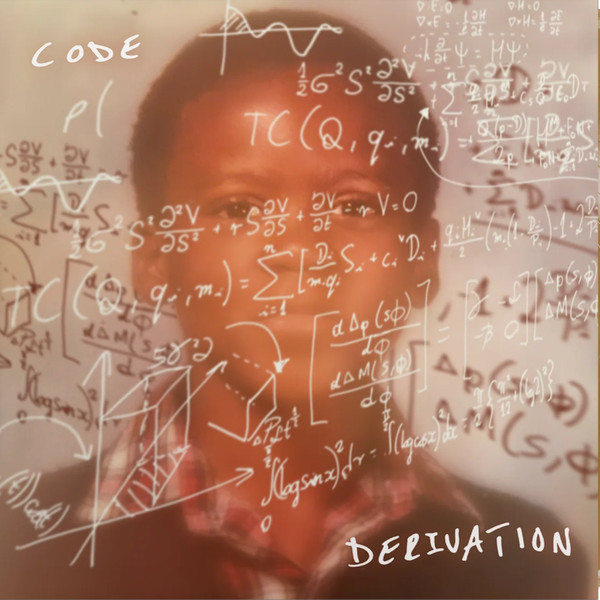
Code Derivation (Concord)
Robert Glasper
Released August 28, 2024
Grammy Nominee for Best Alternative Jazz Album 2025
YouTube:
https://music.youtube.com/playlist?list=OLAK5uy_lUTqgIk_-HQLX9kimBPk5O3KLscUx-3dM
Spotify:
About:
Today five-time Grammy award-winning pianist and composer Robert Glasper releases his second project of 2024, the Apple Music exclusive Code Derivation. On his latest album, Glasper splits the difference between jazz and hip-hop, emphasizing their shared genetics. Code Derivation is largely comprised of two versions of the same track, one played live in studio by Glasper’s band and a version “flipped” by a producer of his choosing.
“Jazz is literally in the beginning-bones of hip hop,” Glasper tells Apple Music. “That’s why I even used the word derivation, because it’s a derivative of jazz. I’ve played with the masters of both of these genres so I wanted to do a project where it’s like, ‘Hey, I’m going to do jazz songs that I wrote with my band—with my friends—and I’m going to get dope producers that are my friends to sample me.’”
On the band side of things, that includes names like Walter Smith III, Mike Moreno, Kendrick Scott, Vicente Archer and Keyon Harrold, with an additional feature from Marcus Strickland. On the production side, Glasper has called on some of his likewise favorite friends and collaborators, people like Hi-Tek, Black Milk, Taylor McFerrin, Kareem Riggins, and the one guest Glasper would be hard pressed to deny as his favorite of the bunch, his son Riley. On the MC front, Glasper’s called on acts like Beaumont, Texas-hailing Jamari (a frequent collaborator of his son), Minneapolis’ MMYYKK, and Brooklyn-born Oswin Benjamin, young rhymers who Glasper says became the project’s pièce de résistance.
Track Listing:
1. Soundcheck One 00:21
2. Say Less 05:19
3. Say Less [Flipped by Riley Glasper] 02:19
4. Wake Up 02:59
5. Wake Up [Flipped by MMYYKK] 03:08
6. Madiba 10:34
7. Madiba [Flipped by Hi-Tek] 02:54
8. AJ’s Vibe 06:15
9. AJ’s Vibe [Flipped by Black Milk] 03:02
10. Waiting on Arrival 04:46
11. Waiting on Arrival [Flipped by Taylor McFerrin] 02:48
12. Rm 112 09:01
13. Rm 112 [Flipped by Karriem Riggins] 02:45
14. Soundcheck Two 00:29
15. M&M March [Flipped by Riley Glasper] 01:06
Personnel:
Robert Glasper: piano
Mike Moreno: guitar
Walter Smith III: tenor saxophone
Vicente Archer: double bass
Kendrick Scott: drums
Keyon Harrold: trumpet
Marcus Strickland: tenor saxophone
Produced by Robert Glasper
Executive Producer: Vincent Bennett
Recorded by Qmillion, assisted by Jonathan Lopez Garcia
Mixed by Qmillion
Masterred by Chris Athens
Album Cover Design: Stephanie Darden
Karriem Riggins, Hi-Tek, Black Milk, Taylor McFerrin and Riley Glasper.
Review:
I don’t think Glasper did this album any favors by having it exclusively streaming on Apple Music for the first year of its existence. Maybe Rob got paid enough for the exclusivity clause to make it worth his while, but this is a project that deserves more attention than it got. Now that it is universally available online and (finally) in physical formats, I hope more people get hip to it.
The conceit of Code Derivation is that each of its songs appears twice, once as a jazz performance and then again “flipped” by a hip-hop producer, and sometimes featuring vocals. For the record to work, the jazz has to be legit. If the foundational tracks were just vamps and breaks set up for obvious samples, there would be neither risk nor reward. Glasper insures that the jazz is quite good indeed, and he does so by assuming a role we’re not used to seeing him in. On the core tracks, he plays (exclusively, I believe) acoustic piano and leads a straightforward sextet of all-star New York players: Walter Smith III, tenor saxophone; Keyon Harrold, trumpet; Mike Moreno, guitar; Vincente Archer, bass; Kendrick Scott, drums. That’s a band I’d go see any night they’re playing.
So, that group recorded the main tracks of the album, all Glasper originals, live in the studio. If you listen to them without the flipped versions—I’ve done that on streaming—you’ll hear an excellent modern, post-bop jazz record with strong tunes and adventurous solos. When you add in the flipped tracks—the vinyl intersperses the jazz and flipped versions one by one—it highlights the producers’ skills, and their ears (how do they hear the samples within the tunes and conceive of them fitting together). At their best, the flipped versions are more recompositions than remixes. Start with the ballad “AJ’s Vibe” on Side C where Glasper takes a beautiful, but unexpected solo on the core jazz tune, which Black Milk turns into an equally beautiful and unexpected hip-hop beat. Then try out Karriem Riggins’ take on “Rm 112,” a complicated, uptempo number in its jazz form. Another nice moment is “Madiba,” a long, venturing jazz track with impressive solos from Harrold and Smith that slows into an atmospheric keyboard pulse at the end. The transition into its hip-hop version (produced by Hi-Tek) is so smooth you likely won’t notice it your first time through the record, but before you know it, it has become the album’s strongest rap track with sharp verses by Oswin Benjamin.
It’s a cool concept, and Glasper comes with the skills and people to pull it off.
Glen Stohr (The Other Vinyl Record Collectors Club)